If you visit Korea, samgyeopsal (삼겹살) is one of the foods you should experience at least once.
Samgyeopsal is thick-cut pork belly grilled directly at the table. But Korean BBQ is about much more than simply grilling meat.
Koreans often wrap the meat in lettuce, add ssamjang, garlic, and kimchi, enjoy a variety of side dishes, and sometimes finish the meal with fried rice.
If you are visiting a Korean BBQ restaurant for the first time, this guide will show you how Koreans typically enjoy samgyeopsal, from grilling the meat to making ssam and enjoying banchan.
1. What Is Samgyeopsal?
Samgyeopsal literally refers to pork belly, a cut of pork with alternating layers of meat and fat.
At Korean BBQ restaurants, thick slices of pork belly are usually grilled on a hot plate or grill installed directly at the table.
One of the fun parts of Korean BBQ is that diners often cook the meat themselves while eating and talking together.
Rather than ordering an individual plate for each person, everyone usually shares the grilled meat from the same table.
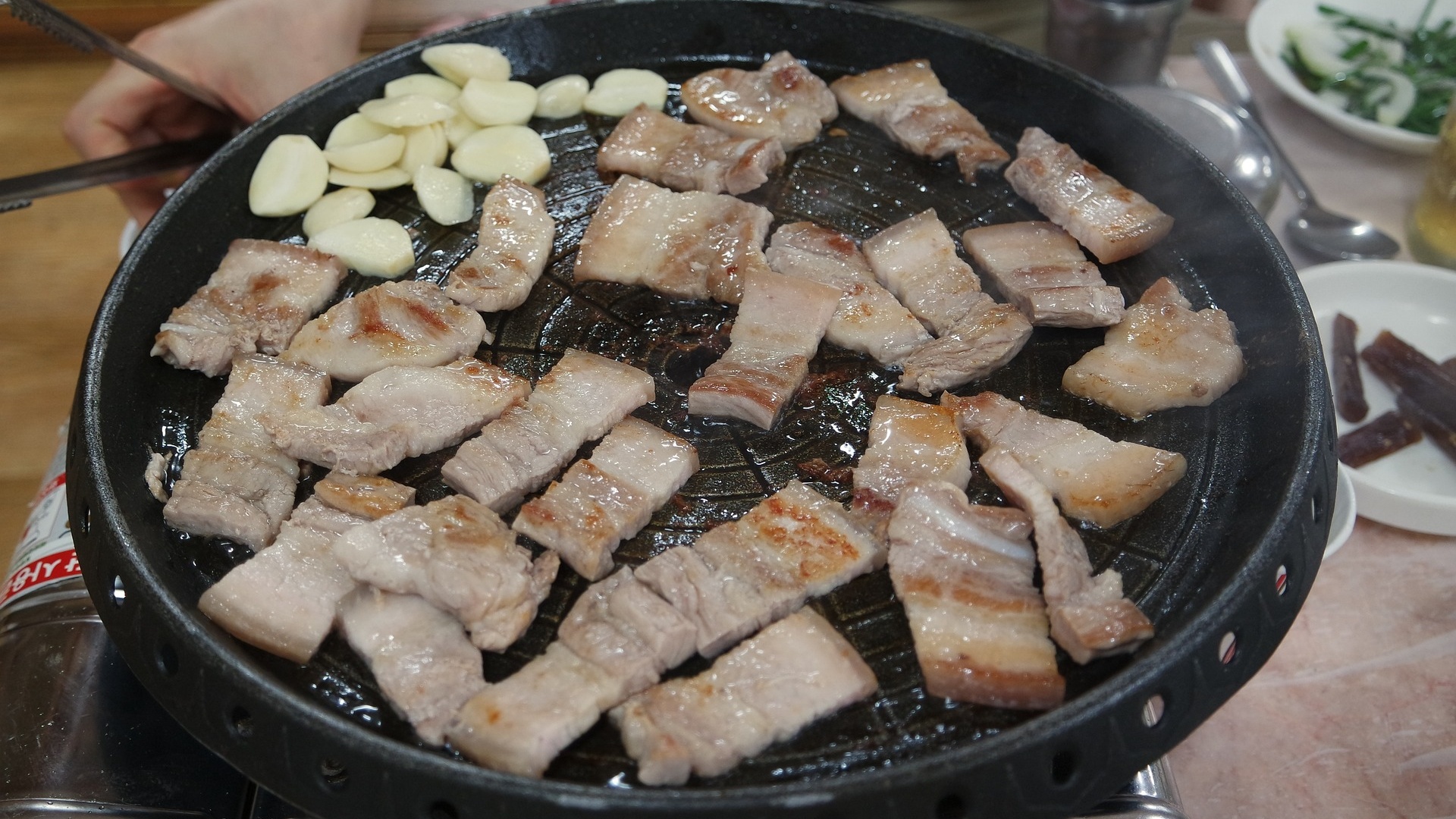
2. How Do Koreans Grill Samgyeopsal?
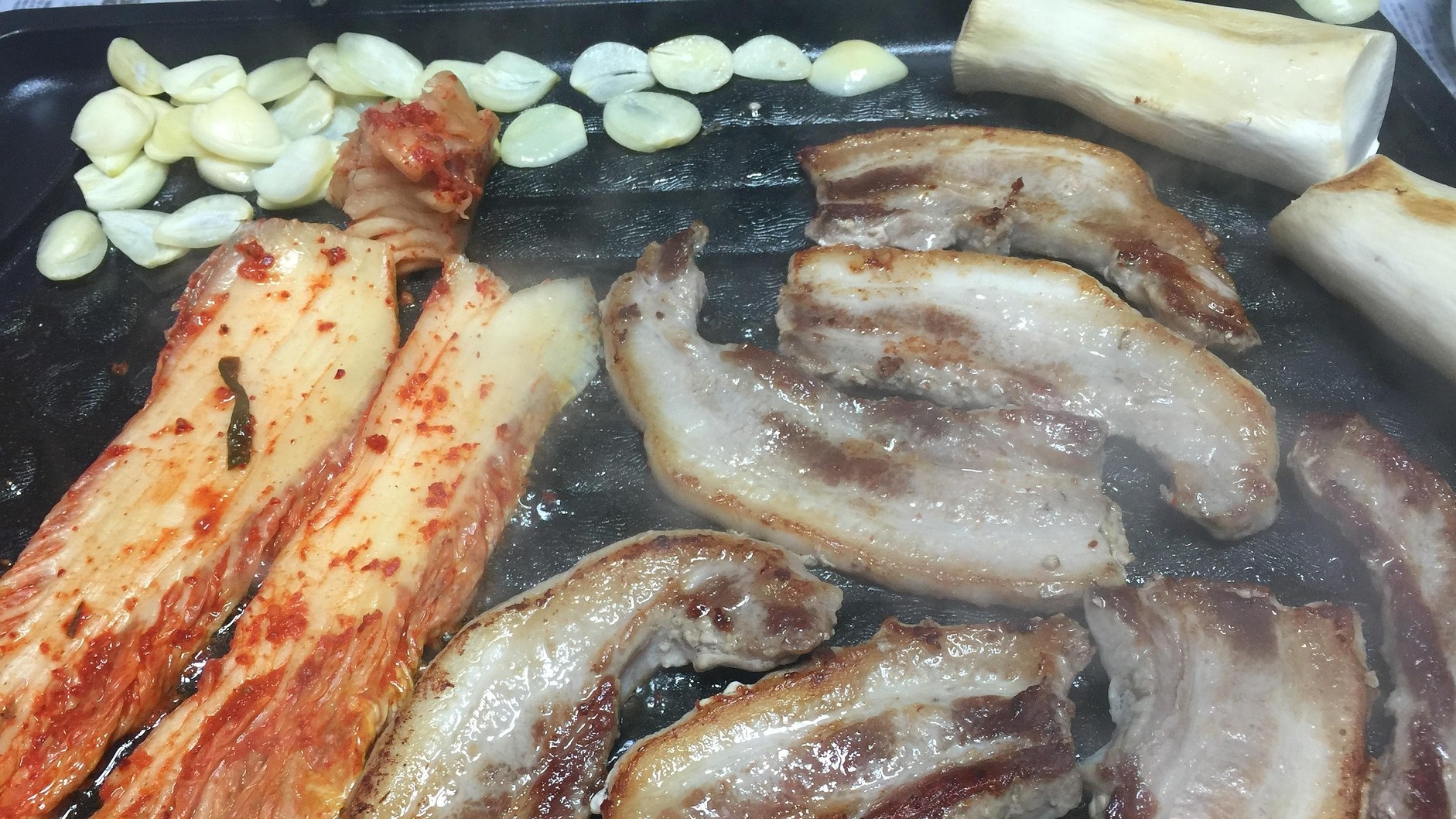
Place the pork belly on the hot grill and cook it until both sides are nicely browned.
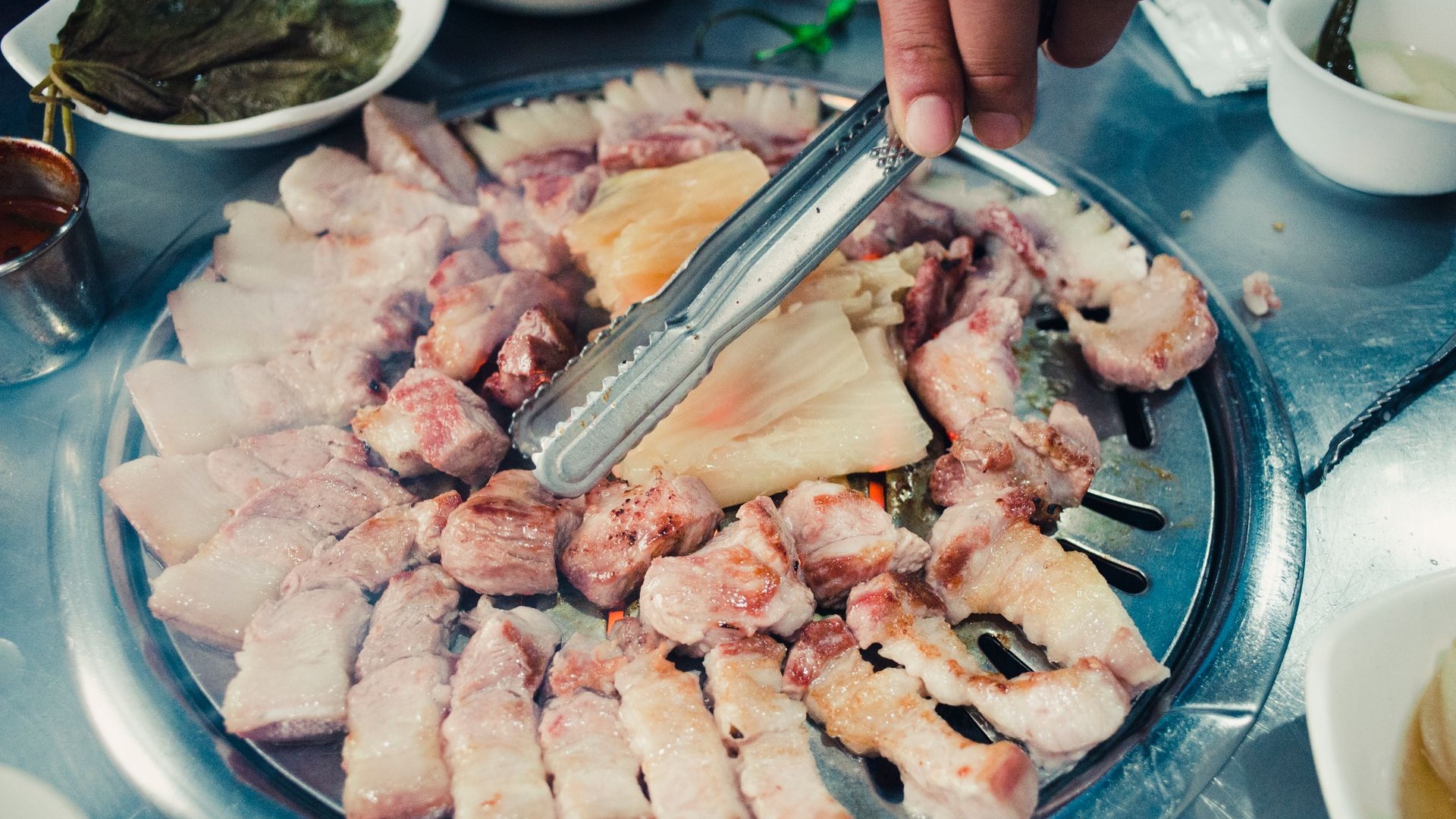
When the meat is almost cooked, use kitchen scissors and tongs to cut it into bite-sized pieces.
At many Korean BBQ restaurants, scissors are placed right on the table. This may look unusual to some visitors, but using scissors to cut meat is completely normal in Korea.
Try not to flip the meat too frequently. Let one side develop a nice golden-brown crust before turning it over.
3. The Korean Way: Make a Ssam
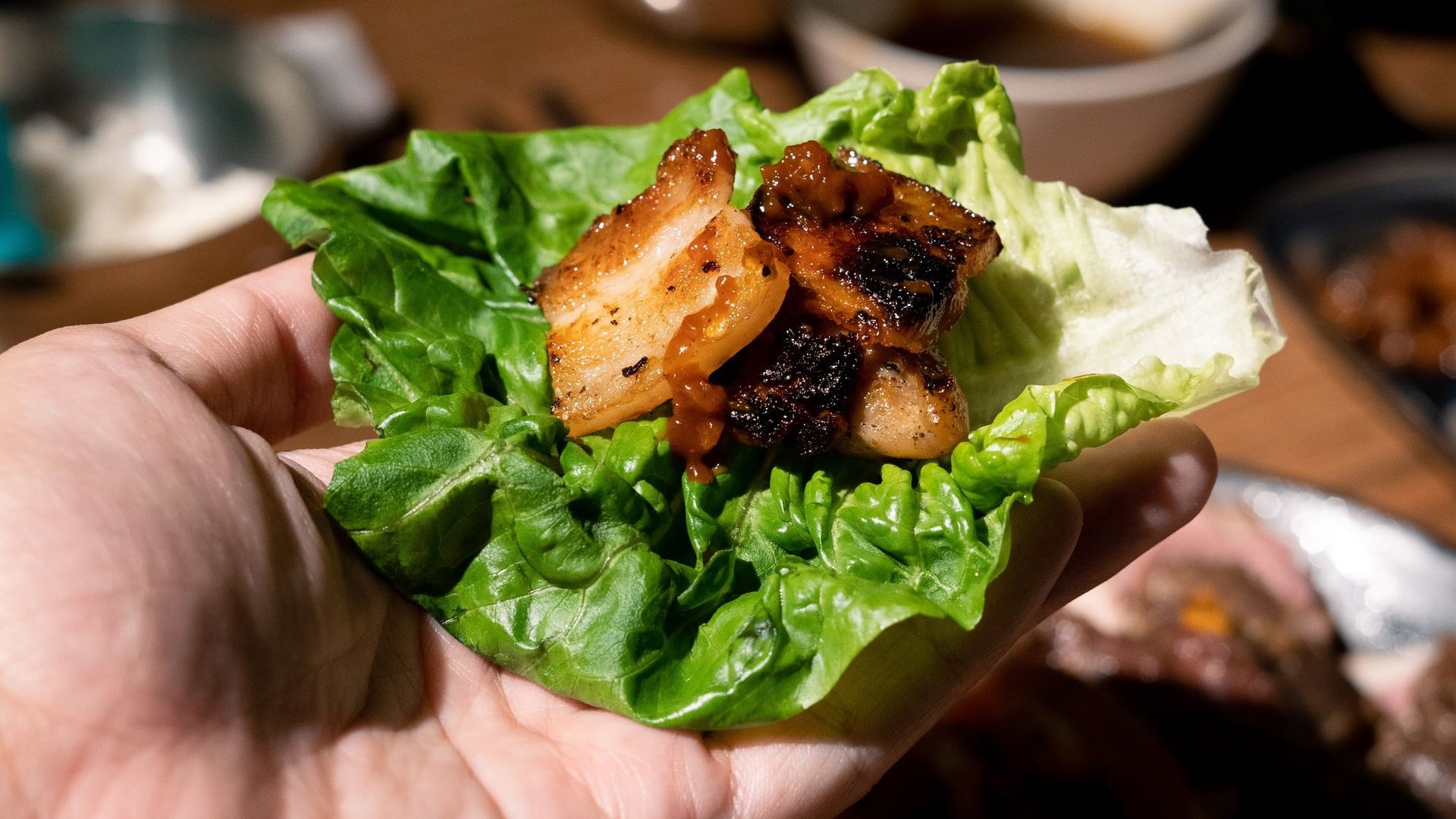
One of the most Korean ways to enjoy samgyeopsal is by making a ssam (쌈).
Ssam means wrapping food in leafy vegetables such as lettuce or perilla leaves.
A typical samgyeopsal ssam might include:
Lettuce + grilled pork belly + ssamjang + garlic + kimchi
Place everything on a lettuce leaf, wrap it up, and eat it together in one bite.
There is no single correct combination. You can add or remove ingredients depending on your taste.
This combination of hot grilled meat, fresh vegetables, savory sauce, and kimchi is one of the reasons Korean BBQ has such a distinctive flavor.
4. What Is Ssamjang?
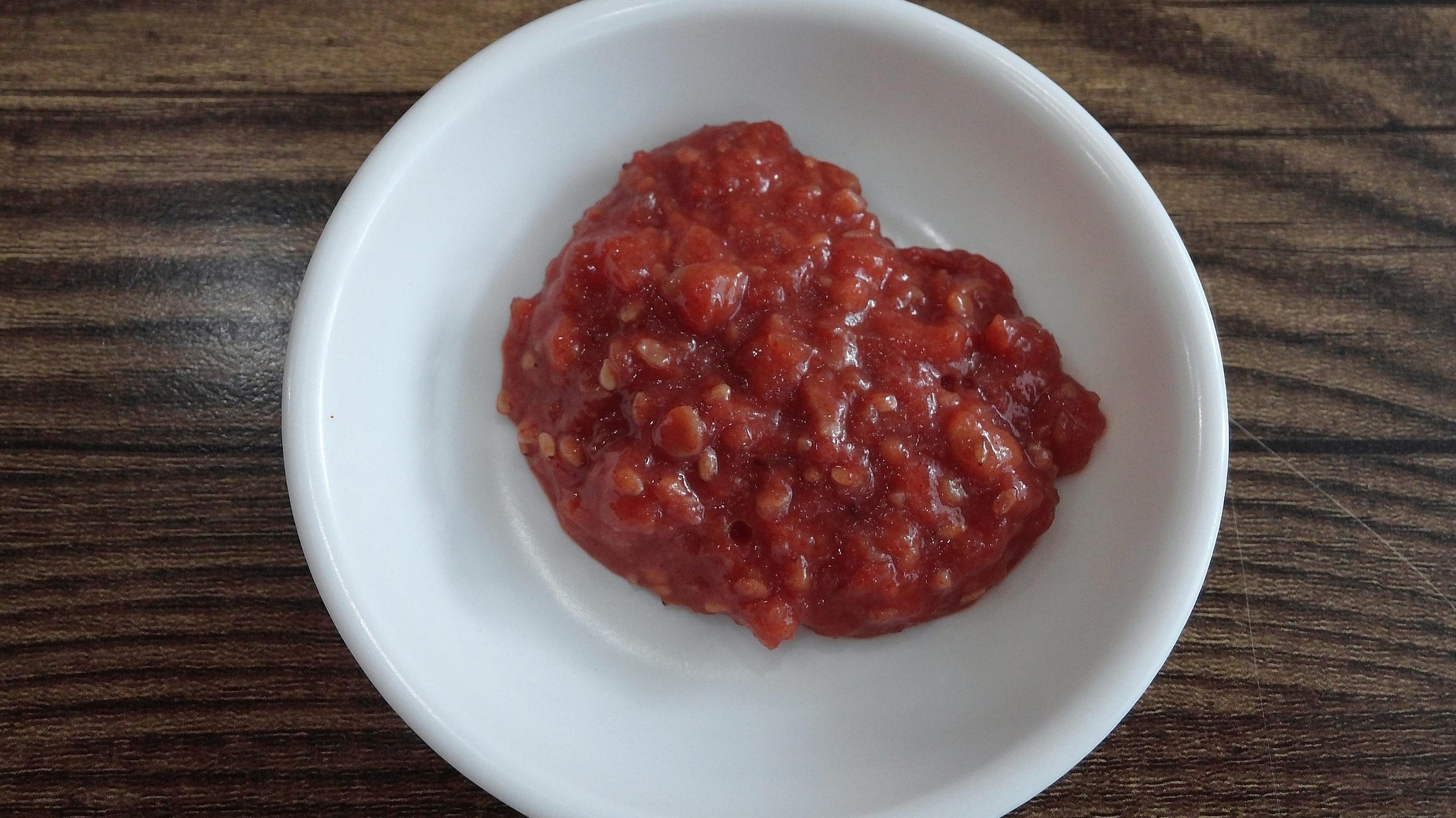
Ssamjang (쌈장) is a thick, savory Korean dipping sauce commonly eaten with grilled meat.
It is typically made using fermented soybean paste and red pepper paste along with other seasonings.
You can dip the grilled pork directly into ssamjang or add a small amount to your lettuce wrap.
The sauce has a rich, salty, slightly spicy flavor, so you only need a little.
5. What About the Garlic?
Raw or grilled garlic is another common companion to samgyeopsal.
Some Koreans put a slice of raw garlic directly into their ssam, while others prefer to grill it with the pork until it becomes softer and milder.
If raw garlic tastes too strong, try grilled garlic instead.
It pairs especially well with pork belly and ssamjang.
6. Should You Grill the Kimchi?
Yes — and many Koreans love it this way.
Kimchi can be eaten cold as a side dish, but when eating samgyeopsal, it is also common to place kimchi directly on the grill.
As it cooks in the rendered pork fat, the kimchi becomes softer and develops a richer flavor.
Try eating grilled kimchi and samgyeopsal together for a classic Korean BBQ combination.
7. What Are All Those Side Dishes?
If it is your first time at a Korean restaurant, you might be surprised by the number of small dishes that arrive at the table.
These are called banchan (반찬), or Korean side dishes.
Depending on the restaurant, you may receive kimchi, seasoned vegetables, pickled radish, onions, salad, dipping sauces, and other small dishes.
At many Korean restaurants, some basic side dishes can be refilled at no additional charge. However, refill policies vary by restaurant, so it is always best to check if you are unsure.
🔗 Learn more about Korean banchan culture
🔗 Learn more about free side-dish refills in Korea
8. Finish the Meal with Fried Rice 😋
Think the meal is over when the meat is gone?
Not necessarily.
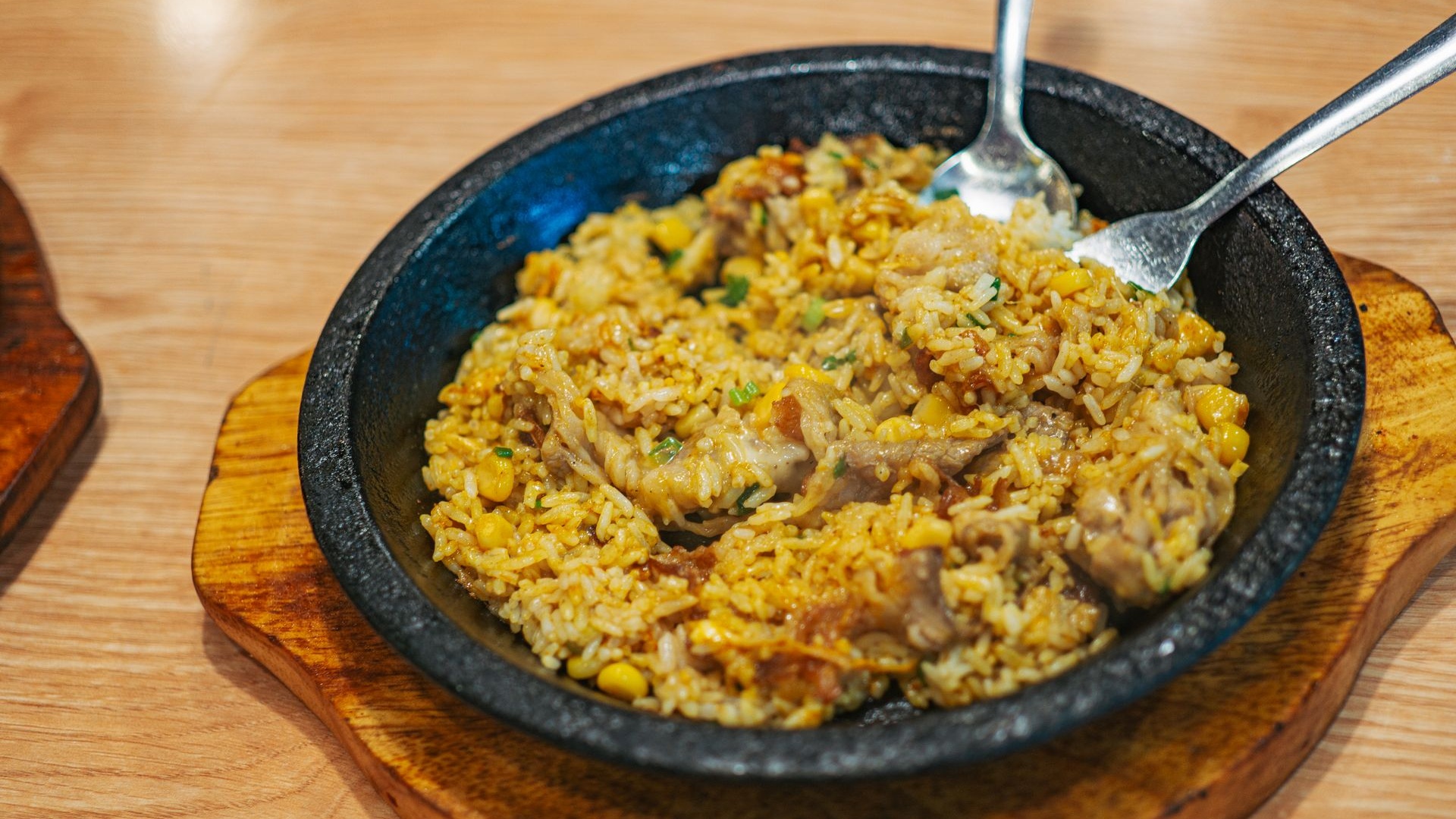
At many Korean BBQ restaurants, diners finish the meal with bokkeumbap (볶음밥), or Korean fried rice.
Rice may be mixed on the hot grill with ingredients such as kimchi, seaweed, vegetables, and the remaining flavors from the meat.
The slightly crispy rice that forms on the hot grill is especially delicious.
For many Koreans, fried rice is not just an extra dish — it is the grand finale of the BBQ meal.
9. Why Do Koreans Love Samgyeopsal So Much?
Samgyeopsal is more than simply grilled pork.
In Korea, going out for samgyeopsal is often a social experience shared with friends, family, or coworkers.
People gather around the grill, cook the meat together, share side dishes, make their own ssam, and talk over the meal.
That communal experience is an important part of Korean BBQ culture.
So if you visit Korea, don't just think of samgyeopsal as another pork dish.
Enjoy the entire experience around the grill.
Final Tip
There is no need to worry about eating samgyeopsal "perfectly."
Start with a piece of grilled pork, try it with ssamjang, make a lettuce wrap, add some grilled garlic or kimchi, and find the combination you like best.
And if fried rice is available at the end of the meal, save a little room for it. 😋
Experiencing samgyeopsal this way is not just about tasting Korean food — it is also a fun way to experience Korean dining culture.
🇰🇷 Read the Korean Version
📌 Sources
- VISITKOREA (Korea Tourism Organization) — Korean food and dining culture
- National Institute of Korean Language — Korean food terminology
🇺🇸 AI Translation Notice
This English version was translated from the Korean version using AI.
The content was reviewed for natural English expression, but some expressions may differ from the original Korean text.
'Korea Travel & Life' 카테고리의 다른 글
| 한국식 삼겹살 제대로 먹는 법|쌈·쌈장·마늘·김치·반찬까지 총정리 (0) | 2026.09.12 |
|---|---|
| Are Korean Side Dishes Free? A Guide to Banchan Refills in Korea (0) | 2026.09.11 |
| 7 Common Korean Side Dishes and How to Eat Them (0) | 2026.09.09 |
| 10 Korean Foods Foreigners Love | Must-Try Korean Dishes (0) | 2026.09.07 |
| 10 Must-Visit Hotspots in Korea|Best Places to Experience Seoul, Busan and Jeju (0) | 2026.09.03 |


