Trying Korean food is one of the best parts of traveling in Korea.
From famous dishes like bulgogi, bibimbap, samgyeopsal, and kimchi jjigae to small local restaurants you discover while exploring, there are countless foods to try.
But if it's your first time eating at a restaurant in Korea, a few things may feel unfamiliar.
“How do I call the staff?”
“Are side dishes free?”
“Where do I pay?”
“Do I need to tip?”
Here are 10 useful things to know before eating at a restaurant in Korea.
1. Check the Menu and Prices Before Ordering
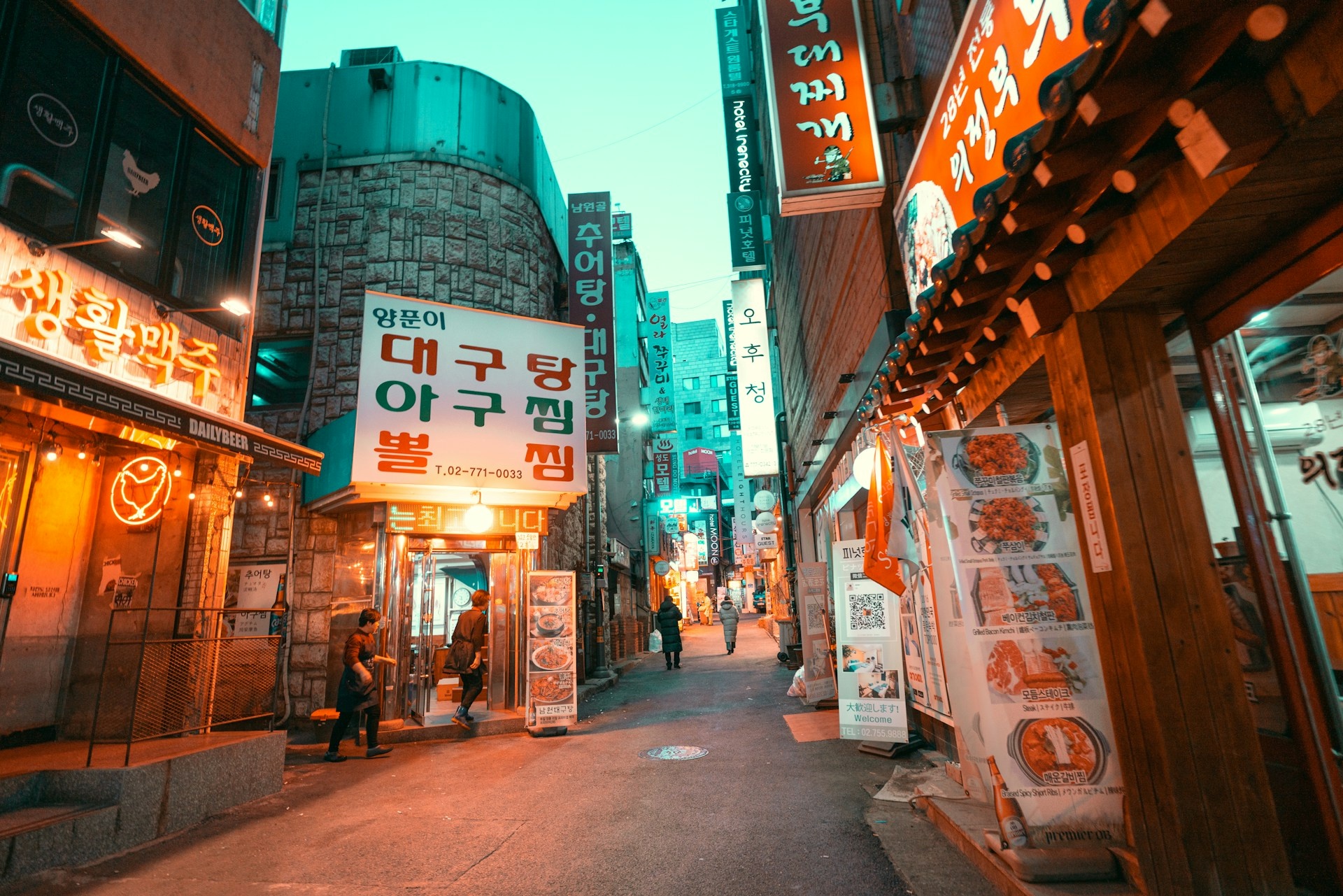
Many Korean restaurants display their menu and prices near the entrance or on the wall.
Restaurants in popular tourist areas may also provide menus with photos or English descriptions.
If the menu is only in Korean, a translation app can be helpful.
Also keep in mind that some dishes may require a minimum order of two servings, so check before ordering.
2. Look for a Call Button on the Table
In many Korean restaurants, staff members don't constantly check every table.
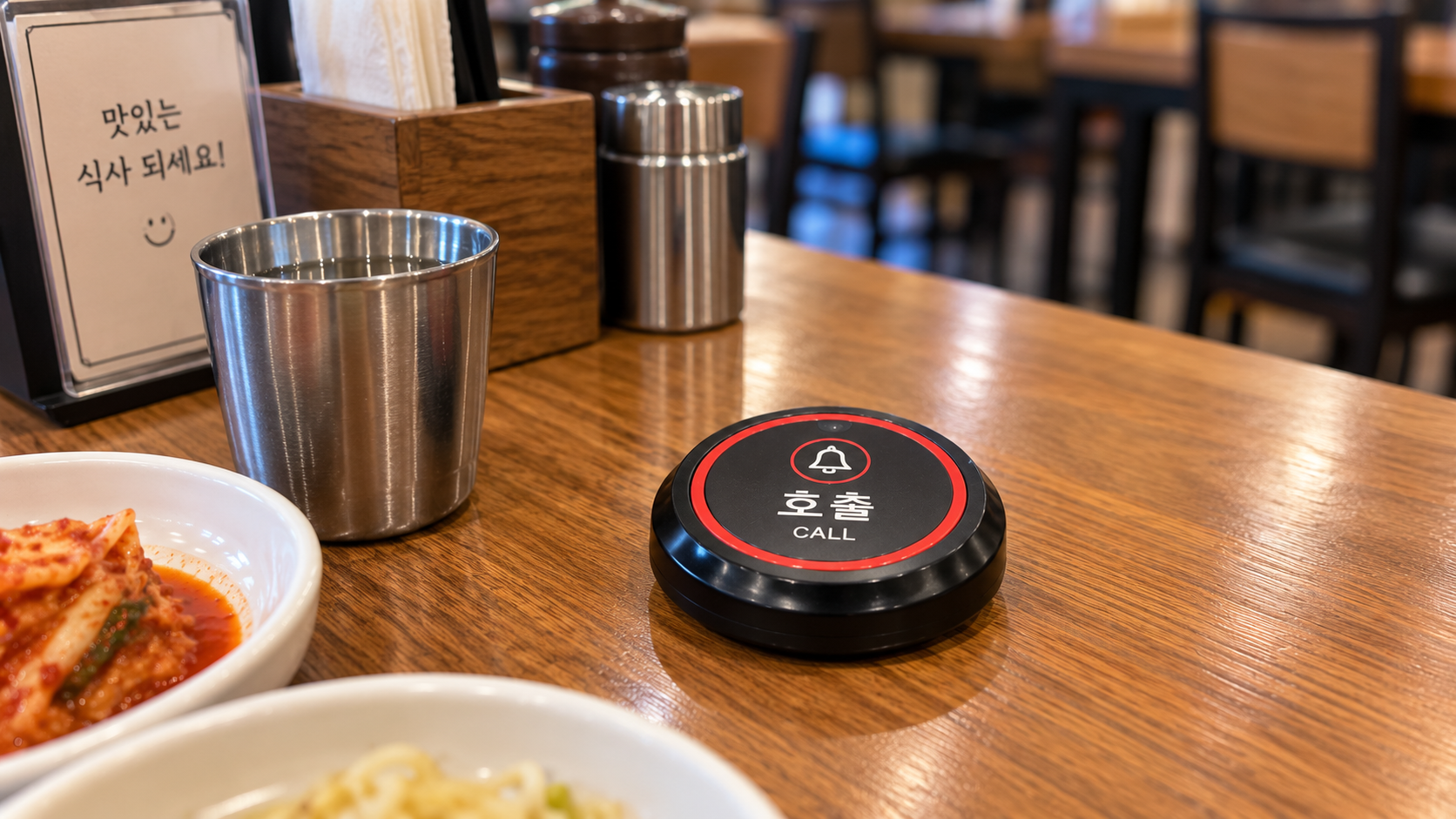
Instead, you may see a small call button on the table.
Pressing it lets the staff know that you need assistance or would like to order something.
If there isn't a button, you can simply say:
“여기요!”
(Yeogiyo!)
= “Excuse me!”
It's one of the most useful expressions to know when dining in Korea.
3. Water and Side Dishes May Be Self-Service
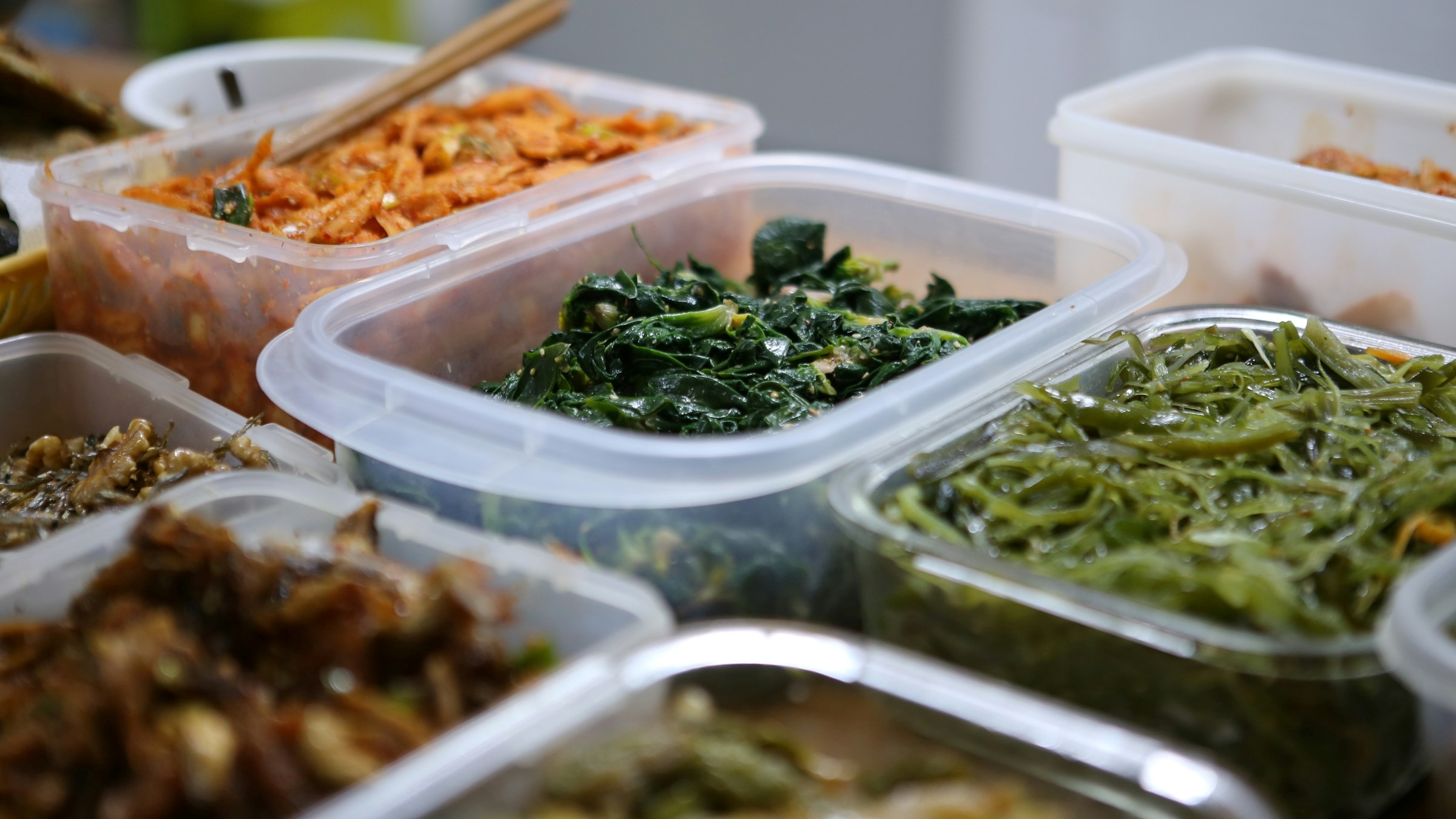
Some restaurants bring water and side dishes directly to your table, while others have a self-service area.
If you see signs saying 셀프 or SELF, you may need to get water, extra side dishes, or other items yourself.
Take a quick look around the restaurant before calling the staff.
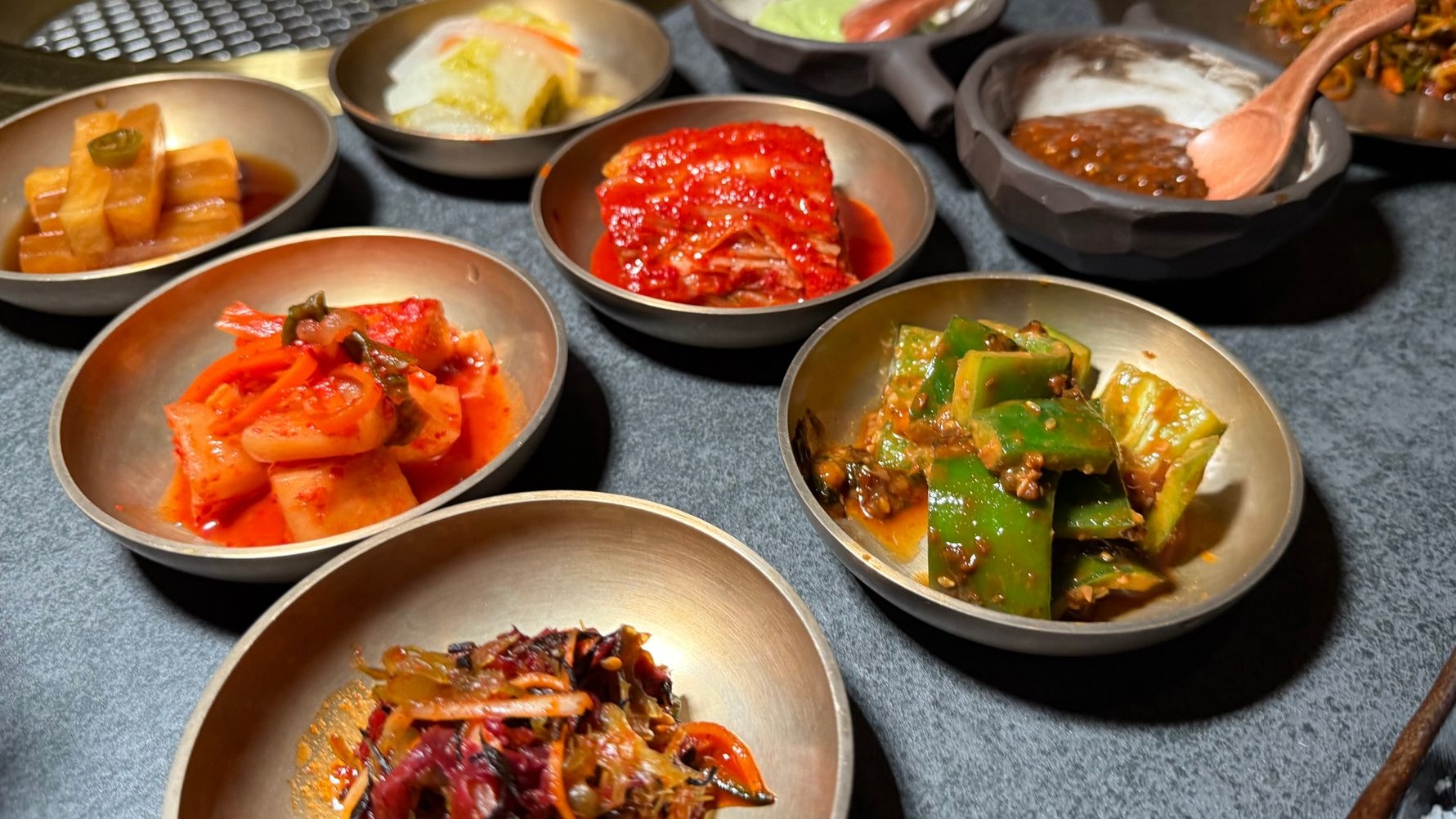
4. Banchan Often Comes with Your Meal
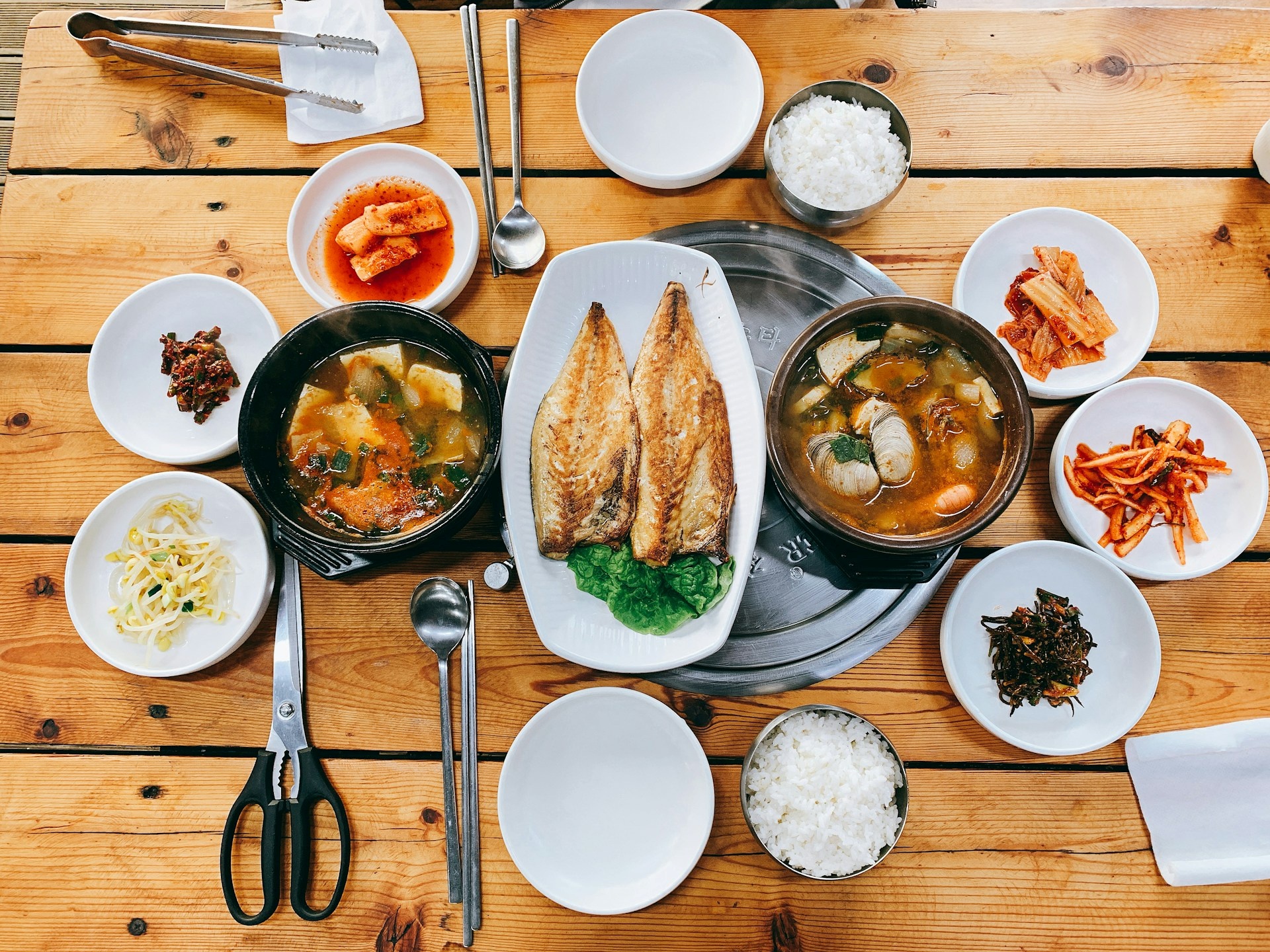
At many Korean restaurants, your main dish is served with several small side dishes known as banchan.
Kimchi is one of the most common, but the selection varies depending on the restaurant and the meal.
Some restaurants allow refills of certain side dishes, but refill policies and additional charges can vary.
If you're unsure, ask the staff before getting more.
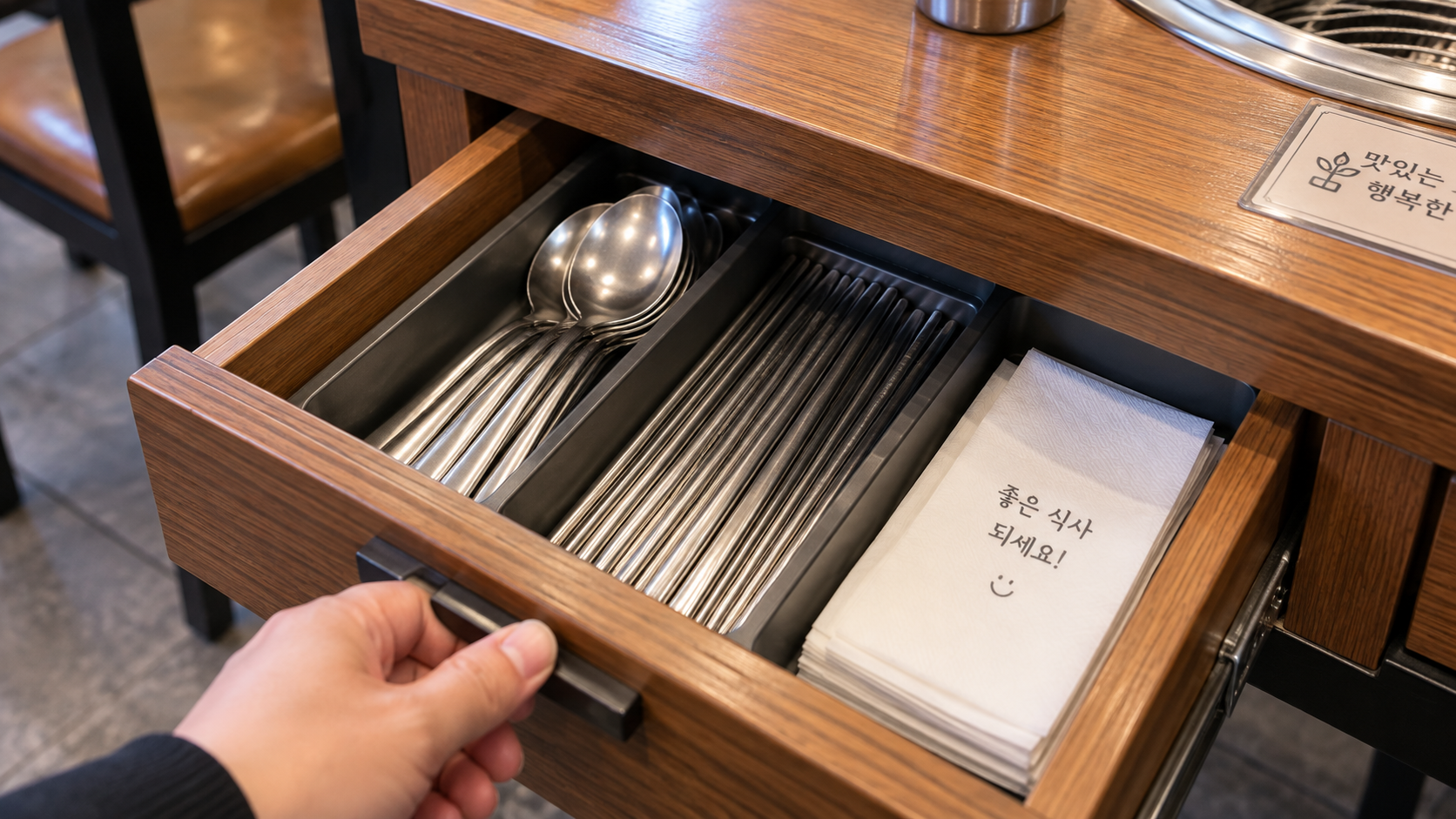
5. Can't Find the Spoon and Chopsticks? Check the Table
Don't worry if you sit down and can't see any utensils.
In many Korean restaurants, stainless-steel spoons and chopsticks may be stored in a container on the table or inside a drawer underneath the tabletop.
Napkins may also be stored on the side of the table or nearby.
Once you know where to look, you'll start noticing these drawers everywhere.
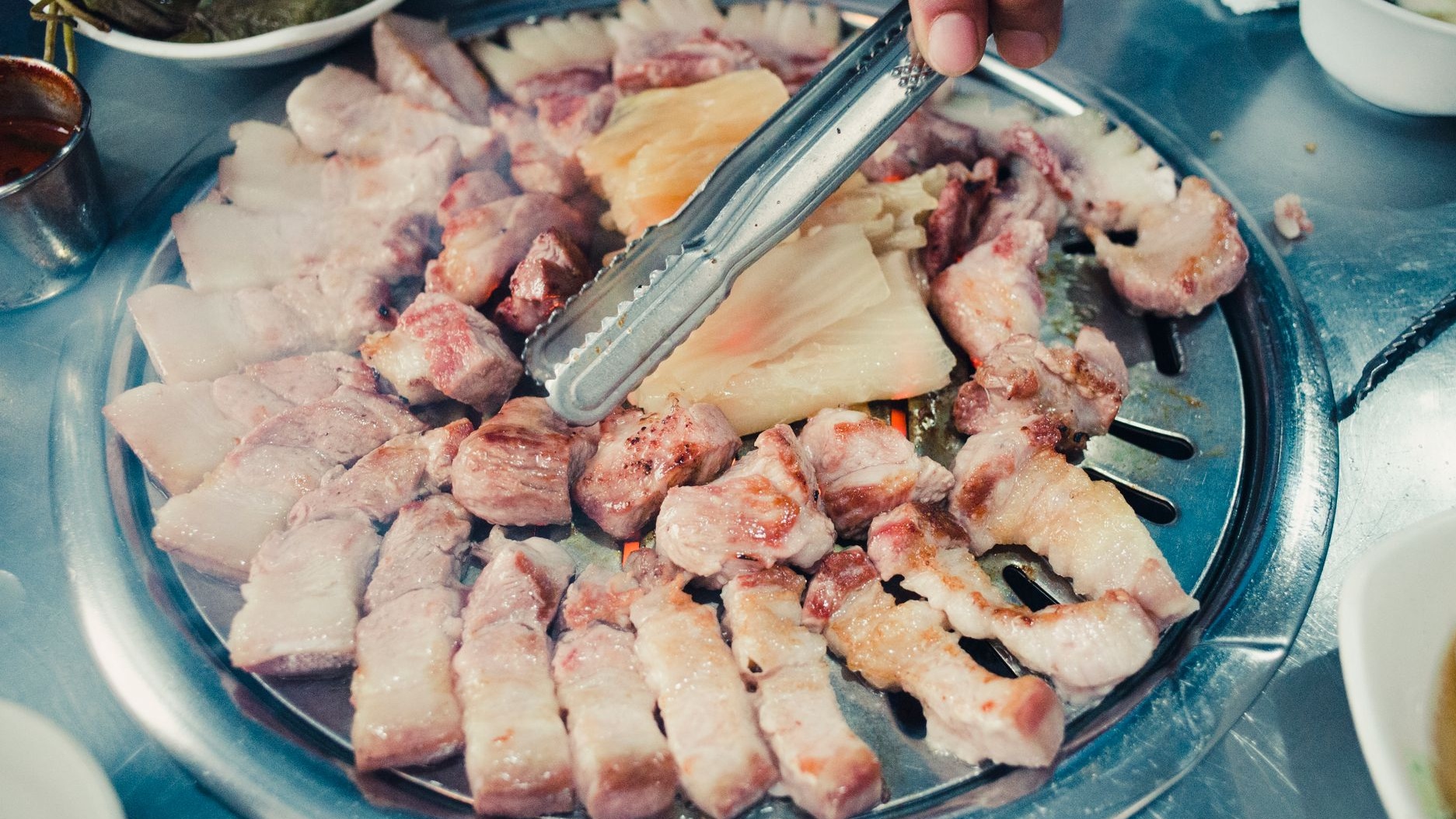
6. At Korean BBQ Restaurants, You May Cook the Meat Yourself
At Korean BBQ restaurants, it's common to cook meat on a grill built directly into the table.
Depending on the restaurant, the staff may cook the meat for you, or you may be expected to grill it yourself.
If you're not sure what to do, watch what happens at nearby tables or ask a staff member.
And of course, be careful around the hot grill.
🥩 Want to Try Korean BBQ?
If you're planning to try Korean BBQ, check out this guide to samgyeopsal, ssam, banchan, and Korean BBQ dining culture.
👉 READ THE KOREAN BBQ GUIDE HERE
7. Sharing Food Is Common
When eating with family or friends in Korea, dishes such as grilled meat, stews, and banchan are often placed in the middle of the table for everyone to share.
However, not every Korean meal is shared. Many dishes are also served individually.
If you're dining with a group, simply check how the food is served and decide what to share together.
8. Check the Spice Level and Allergy Ingredients
Korean food often uses ingredients such as gochujang and red pepper flakes, so some dishes can be quite spicy.
Even something described as “a little spicy” may feel very hot if you're not used to spicy food.
If you have food allergies, check the ingredients before ordering.
For serious allergies, carrying a clearly translated allergy card or message that you can show restaurant staff can be especially helpful.
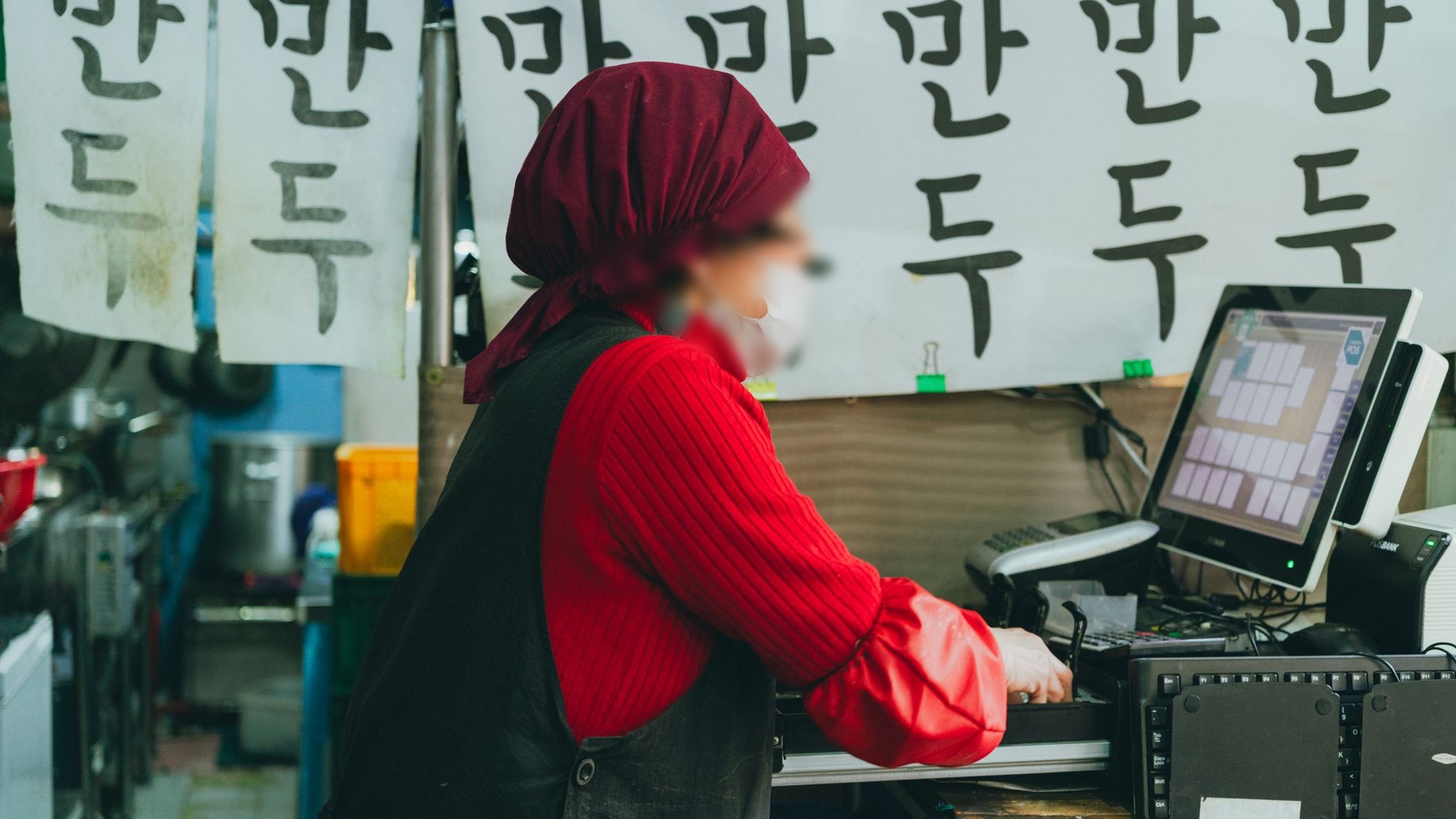
9. You Often Pay at the Counter
At many Korean restaurants, you don't need to wait for someone to bring the bill to your table.
When you've finished eating, you can usually walk to the cashier near the entrance and pay there.
Some restaurants use table payment systems or kiosks instead, so follow the instructions provided by the restaurant.
10. Tipping Is Not Generally Expected at Regular Restaurants
At ordinary restaurants in Korea, adding a percentage-based tip to your bill is not generally expected in the way it is in some countries.
You normally pay the amount shown on your bill.
Hotels and certain specialized services may operate differently, so follow any specific information provided by the business.
First Time at a Korean Restaurant? Remember These Tips
Eating at a restaurant in Korea doesn't have to be complicated.
Remember:
Check the menu and prices · Look for the call button · Check for self-service signs · Look for the utensil drawer · Check where to pay
And if you need to call a staff member, remember:
“여기요!”
(Yeogiyo!)
= “Excuse me!”
After visiting a few restaurants, things like call buttons, banchan, self-service stations, and utensil drawers will quickly start to feel familiar.
Trying different restaurants and learning how people eat locally can become one of the most enjoyable parts of traveling in Korea.


