Getting sick while traveling can be stressful, especially when you are in a country where you do not speak the language.
In Korea, you can visit a local pharmacy for many common health concerns. But what if you need medicine late at night, cannot explain your symptoms in Korean, or find that nearby pharmacies are already closed?
This guide explains what travelers can do when they need medicine in Korea, including how to find a pharmacy, communicate with a pharmacist, look for late-night options, and understand what medicines may be available at convenience stores.

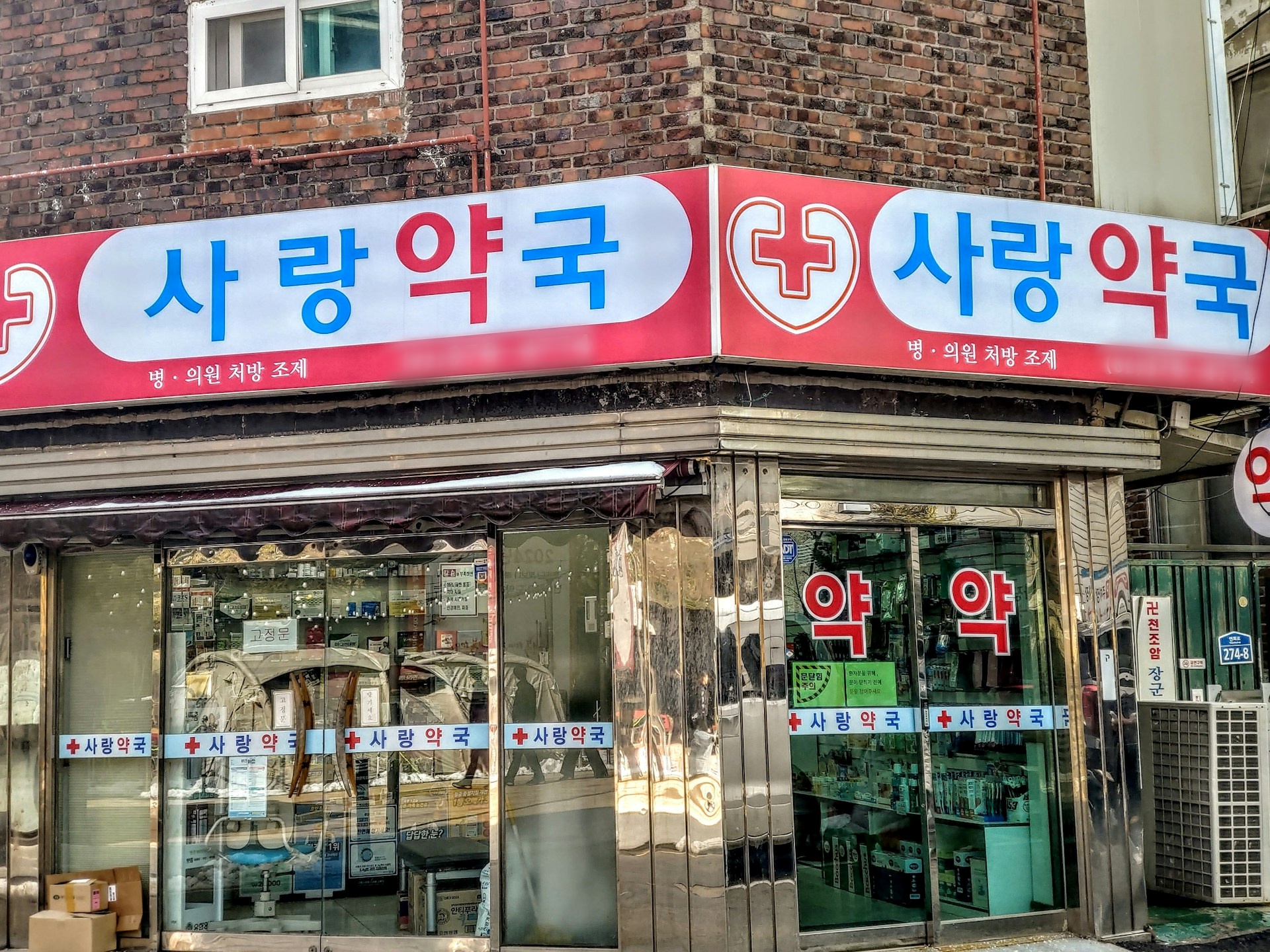
1. Need Medicine During the Day? Look for the Korean Sign “약국”
In Korea, pharmacies are usually easy to recognize by the Korean word “약국” (yak-guk) on the storefront. You may also see a pharmacy symbol or signs such as “PHARMACY.”
If you are using a map or navigation app, searching for 약국 can also help you find nearby pharmacies.
Opening hours vary by location, so if it is already late in the day, check whether the pharmacy is still open before walking there.
👉 Getting Around Korea: 8 Navigation Tips for First-Time Travelers
2. Don’t Speak Korean? Show Your Symptoms Instead
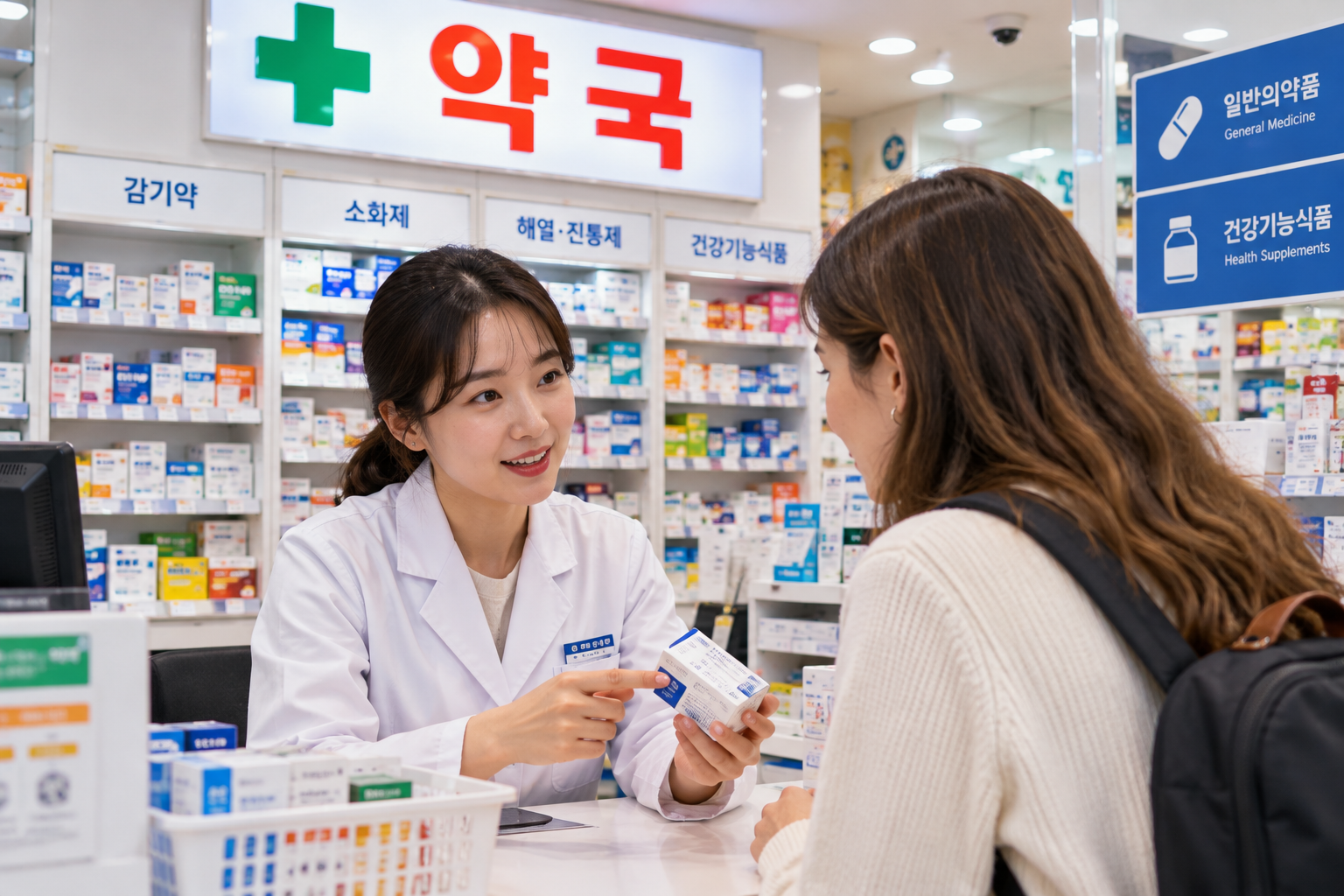
You do not need to speak fluent Korean to ask a pharmacist for help.
If explaining your symptoms is difficult, use a translation app and show the pharmacist useful information on your phone. For example:
• Your main symptoms
• Any allergies you have
• The name of medicine you currently take
• A photo of the medicine or its packaging
Showing a photo can be especially useful if you are trying to explain medicine you normally take at home.
Instead of trying to memorize Korean medical vocabulary, having this information ready on your phone can make communication much easier.
3. Some Medicines Still Require a Prescription in Korea
Not every medicine can be purchased directly from a pharmacy in Korea.
Some medicines are available without a prescription, while others require a prescription from a doctor. This means that even if you regularly take a certain medicine in your home country, you may not be able to buy the same product directly from a Korean pharmacy.
If you take prescription medicine regularly, it is useful to keep a photo of the original packaging, prescription information, or active ingredients on your phone.
For medicines that require medical evaluation or a prescription, you may need to visit a clinic or hospital rather than trying to solve the problem at a pharmacy.
Traveler Tip: If explaining your symptoms in Korean is difficult, show the pharmacist a translation on your phone. If you regularly take medication, showing the medicine name or a photo of its packaging can also be helpful.
4. Need Medicine Late at Night or on a Holiday? Check for an Open Pharmacy First
If you need medicine late at night, on a weekend, or during a public holiday, do not assume that every pharmacy is closed.
Depending on the area, some pharmacies may operate during late-night hours or holidays. Before relying on a convenience store, check whether there is an open pharmacy nearby.
Because pharmacy opening hours can change, always confirm the current operating hours before traveling to one.
This can be particularly useful when you need something that is not available at a convenience store.
If you need medicine late at night or on a public holiday, check for an open pharmacy before heading straight to a convenience store. Business hours shown on map apps may not always reflect holiday or late-night changes, so it is a good idea to confirm that the pharmacy is actually open before visiting.
5. Some Convenience Stores Sell Designated Emergency OTC Medicines
In Korea, certain registered convenience stores can sell a limited selection of government-designated emergency OTC medicines (안전상비의약품).
These include selected fever and pain relievers, cold medicines, digestive medicines, and pain-relief patches. Convenience stores do not carry the same range of medicines as pharmacies, and not every convenience store is authorized to sell them.
These medicines are limited to one package per product per purchase, and they cannot be sold directly to children under the age of 12.
The key point is:
Not “Korean convenience stores sell medicine,” but “registered stores can sell only specifically designated emergency OTC medicines.”
If pharmacies are closed, a registered convenience store may be useful for certain minor needs, but it is not a replacement for a pharmacy.

If you're visiting a convenience store in Korea for the first time, check out the guide below as well.
👉 10 Things That Surprise Foreigners at Korean Convenience Stores
6. Know When a Convenience Store Is Not Enough
Convenience-store medicines in Korea are intended for limited, minor needs. If the medicine you need is not available or your symptoms require medical attention, do not keep relying on convenience-store products.
If the situation is not an emergency but you need medical care, consider visiting a clinic or hospital rather than continuing to search for over-the-counter medicine.
If you need immediate medical assistance, do not spend time looking for a pharmacy or convenience store. Call 119, Korea’s emergency number. When calling from within Korea, you can dial 119 directly without a country code.
7. Need Travel or Language Assistance in Korea? Use 1330
If you have trouble finding a pharmacy or communicating in Korean while traveling, the 1330 Korea Travel Helpline can be useful.
Operated by the Korea Tourism Organization, 1330 provides travel information and multilingual assistance for international visitors. It can help when you need travel-related information or language support during your trip.
Keep in mind that 1330 is not a medical emergency service and does not provide medical diagnosis or treatment.
Need immediate medical assistance → Call 119
Need travel information or tourism-related language assistance → Contact 1330
Knowing the difference can help you choose the right service when an unexpected situation occurs in Korea.
👉 1330 Korea Travel Helpline – Official Information
Quick Guide: If You Need Medicine in Korea
Quick Guide: If You Need Medicine in Korea
If you need medicine during the day, look for a pharmacy marked “약국” or “PHARMACY.” If communication is difficult, use a translation app and show the pharmacist any medicines you regularly take.
At night or on a public holiday, check for an open pharmacy first. Some registered convenience stores sell a limited range of government-designated emergency OTC medicines, but they do not replace pharmacies.
For travel or language assistance, contact 1330. If you need immediate medical assistance, call 119.
🇰🇷 Korean Version
Want to read this article in Korean?


