One of the best parts of traveling in South Korea is trying local food. However, ordering at a restaurant can be challenging if you have food allergies or follow a vegetarian or vegan diet.
Korean dishes sometimes contain ingredients that are not immediately visible. Even vegetable-based dishes may be prepared with anchovy broth or fish sauce, while sauces that appear meat-free may contain allergens or animal-derived ingredients.
This guide explains how to check ingredients at Korean restaurants, useful Korean phrases you can show restaurant staff, common dishes that vegetarian and vegan travelers should be careful with, and what to check before ordering.
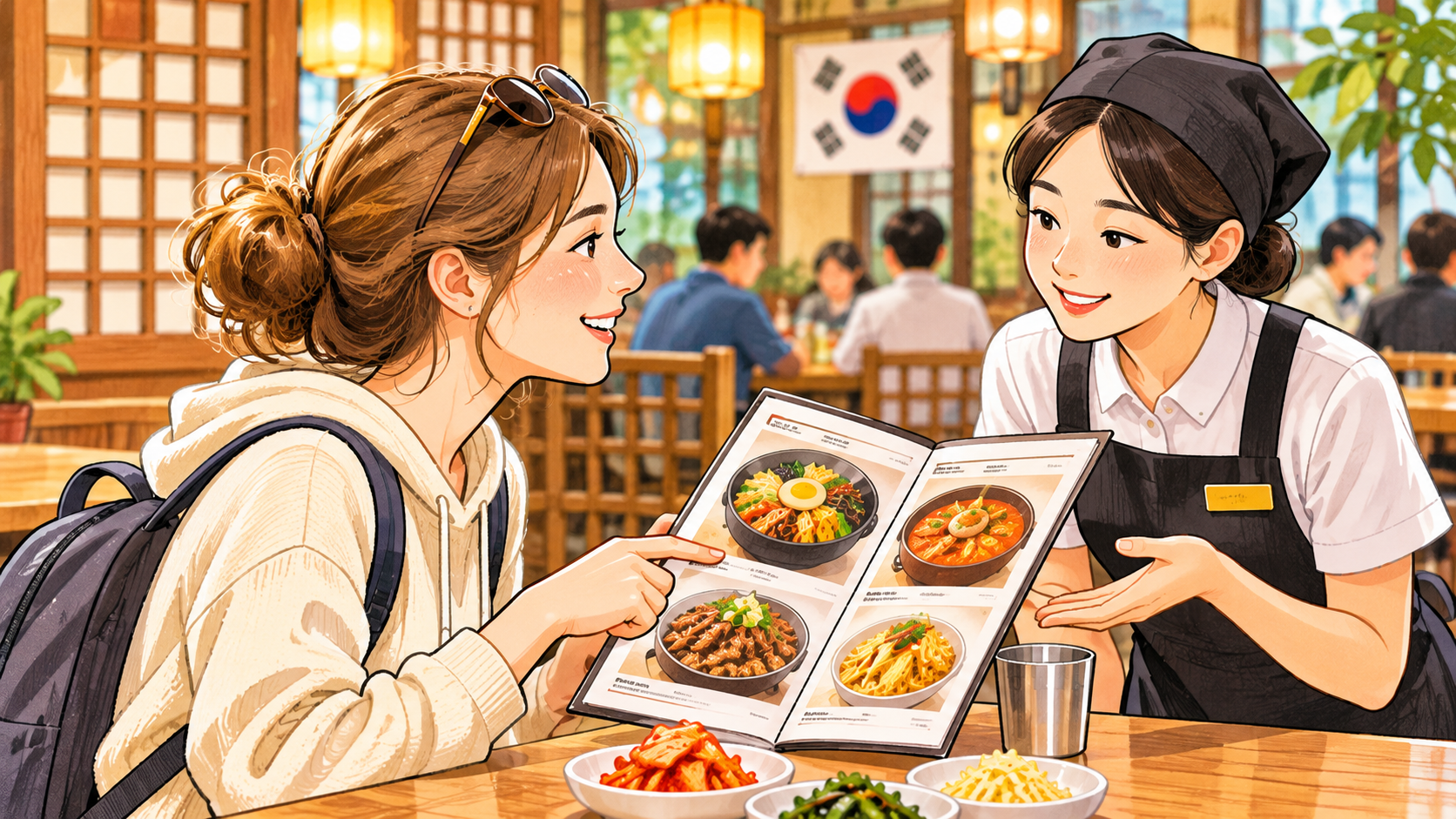
1. Do Not Rely on Menu Photos to Identify Allergens
Many Korean restaurants display photos, dish names, and prices on their menus.
However, a photo cannot tell you everything about the ingredients used in a dish.
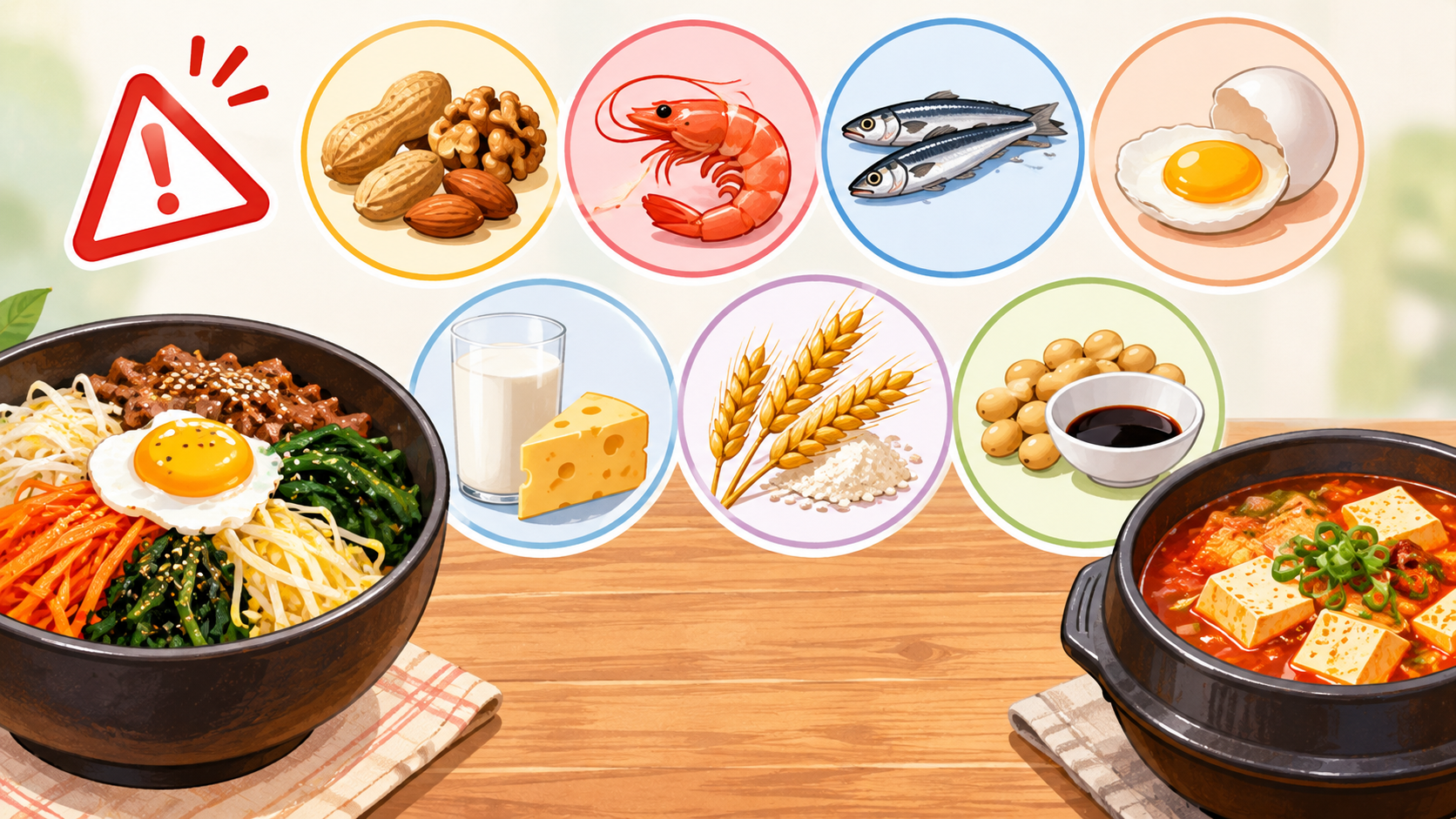
Some ingredients may be difficult to identify in the finished food, including:
- Anchovy broth or seafood stock
- Salted shrimp (saeujeot) and fish sauce
- Seasonings containing soy or wheat
- Sauces containing peanuts or tree nuts
- Eggs, milk, or ingredients from processed foods
Not every restaurant uses the same recipe. Even dishes with the same name can contain different ingredients depending on where they are prepared.
Always ask about ingredients before ordering, especially if you have a food allergy.
If you have a severe allergy, it is also important to ask whether cooking equipment or preparation areas are shared with other foods.
2. Useful Korean Phrases to Show Restaurant Staff
Even if you do not speak Korean, you can save these phrases on your phone and show them to restaurant staff.
| Korean Phrase | English Meaning |
| 저는 ___ 알레르기가 있습니다. | I am allergic to ___. |
| 이 음식에 ___이/가 들어가나요? | Does this dish contain ___? |
| 소스나 육수에도 들어가나요? | Is it also in the sauce or broth? |
| 조리할 때 같은 기름이나 도구를 사용하나요? | Do you use the same oil or utensils when cooking? |
| 저는 고기와 생선을 먹지 않습니다. | I do not eat meat or fish. |
| 계란과 유제품도 먹지 않습니다. | I also do not eat eggs or dairy products. |
| 재료를 확인할 수 없다면 주문하지 않겠습니다. | If the ingredients cannot be confirmed, I will not order. |
If you have a food allergy, clearly explain that you are allergic to a particular ingredient rather than simply asking for it to be removed.
For example, removing visible shrimp from a dish does not make it safe if shrimp or other allergens are already present in the broth or seasoning.
3. Hidden Animal-Derived Ingredients in Korean Food
Korean cuisine includes many dishes made with vegetables and tofu. However, a dish that contains vegetables is not necessarily vegan.
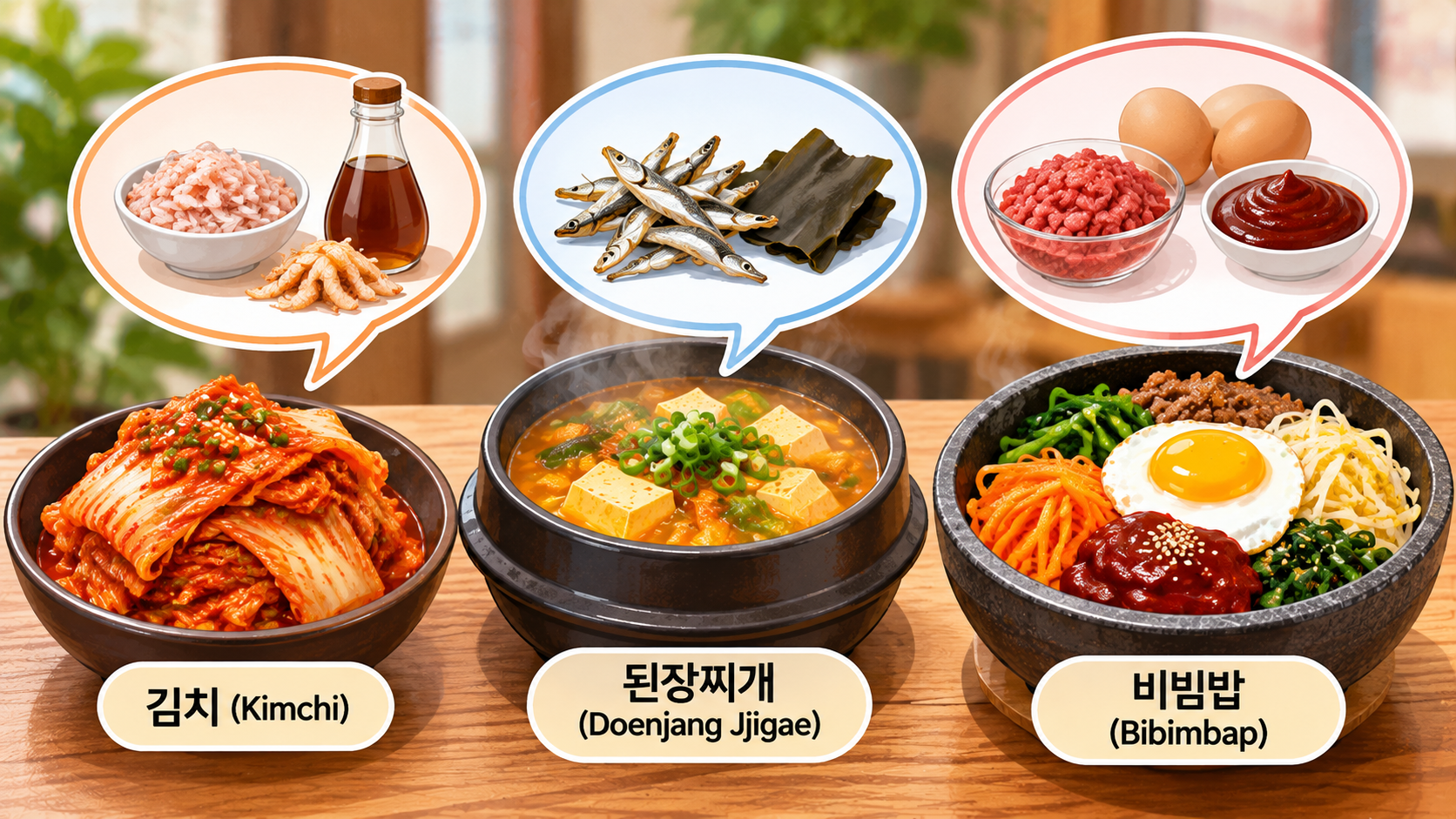
Kimchi
Kimchi is commonly made with vegetables such as napa cabbage or radish, but its seasoning may contain fish sauce or salted shrimp.
Depending on the recipe, kimchi may include anchovy fish sauce, sand lance fish sauce, or salted shrimp.
If you follow a vegan diet, check whether the kimchi is made entirely with plant-based ingredients.
Doenjang Jjigae and Sundubu Jjigae
These Korean stews often contain tofu and vegetables, but they may also be prepared with anchovy broth, seafood, or meat.
Ask about both the broth and the seasonings before ordering.
Bibimbap
Bibimbap often contains vegetables along with meat and eggs.
If you follow a vegan diet, ask whether the meat and egg can be removed and whether the sauce contains any animal-derived ingredients.
Some restaurants also prepare a special gochujang-based sauce for bibimbap that contains minced beef. Do not assume the sauce is vegan simply because the visible meat has been removed.
Noodles and Naengmyeon
Korean noodle dishes may be served with broths made from anchovies, meat, or other animal-derived ingredients.
Check both the noodles themselves and the broth.
Recipes vary between restaurants, so you should not assume a dish is vegetarian or vegan based only on its name.
4. Useful Phrases for Vegetarian and Vegan Travelers
At Korean restaurants, it can be more effective to explain exactly which ingredients you do not eat rather than simply saying, "I am vegetarian."
If You Are Vegetarian
Show the following Korean sentence to restaurant staff:
저는 채식주의자입니다. 고기와 생선은 먹지 않습니다. 육수에도 고기나 생선이 들어가지 않았는지 확인해 주세요.
I am vegetarian. I do not eat meat or fish. Please check that the broth does not contain meat or fish either.
If You Are Vegan
You can use this more detailed request:
저는 비건입니다. 고기, 생선, 해산물, 계란, 우유, 치즈, 꿀을 먹지 않습니다. 육수와 소스에도 동물성 재료가 없는지 확인해 주세요.
I am vegan. I do not eat meat, fish, seafood, eggs, milk, cheese, or honey. Please also check that the broth and sauces do not contain animal-derived ingredients.
Dietary restrictions can vary from person to person. Be specific about the ingredients you need to avoid.
5. If You Have Severe Food Allergies, Ask About Food Preparation
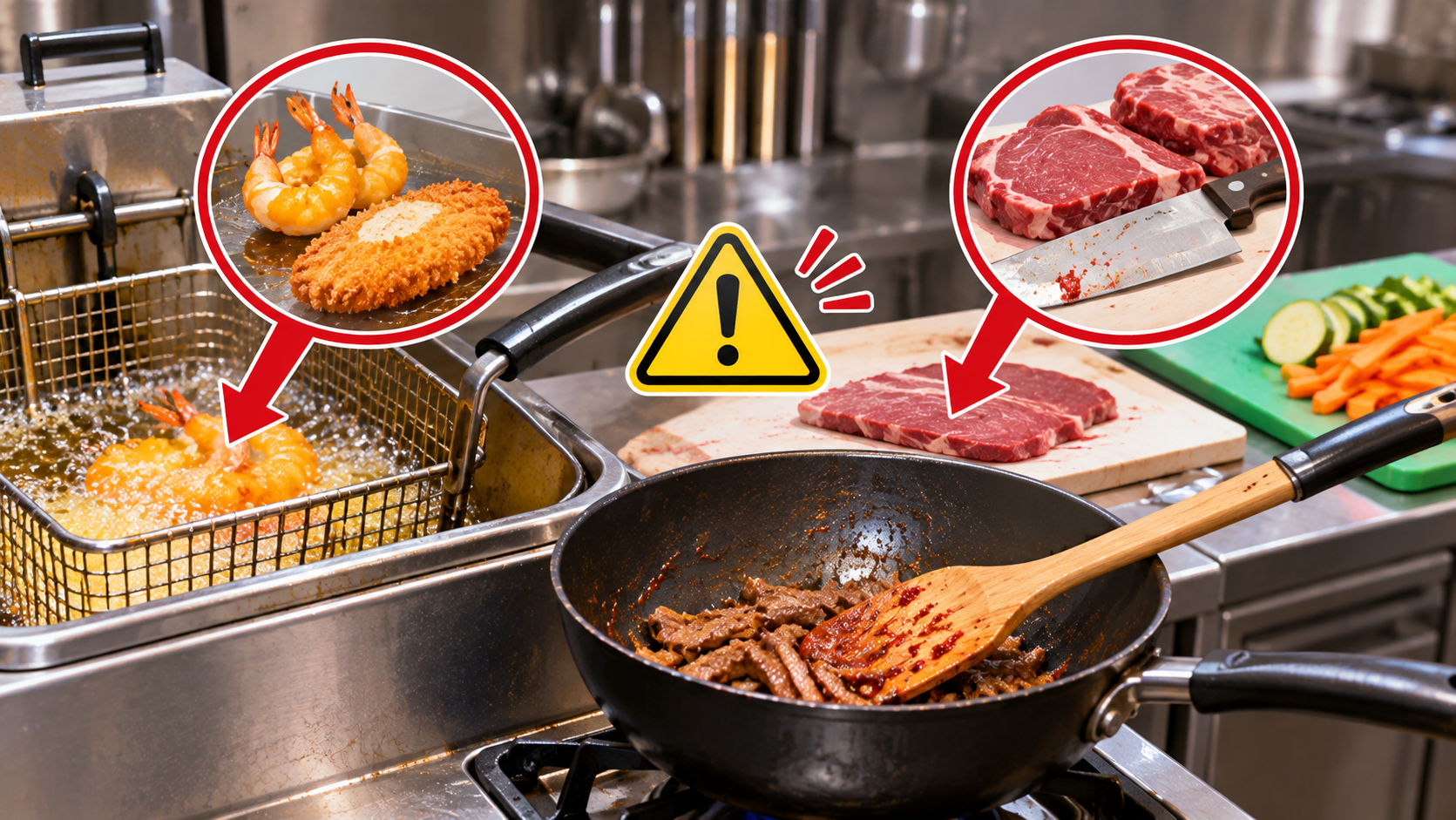
Even when an allergen is not intentionally added to a dish, it may come into contact with the food during preparation.
This is known as allergen cross-contact.
For example, allergens may be transferred through shared frying oil, cooking utensils, cutting boards, or preparation surfaces.
If you have a severe food allergy, ask restaurant staff or the person responsible for preparing the food:
- Does the broth or sauce contain any ingredients I need to avoid?
- Can the restaurant use separately cleaned cooking utensils?
- Are frying oil or food preparation areas shared?
- Can the restaurant clearly understand and accommodate my allergy requirements?
If staff cannot confirm the ingredients or preparation methods, choosing another restaurant may be the safer option.
If you have been prescribed emergency medication or given an allergy action plan by your healthcare professional, bring them with you while traveling.
6. Checklist Before Ordering at a Korean Restaurant
Before ordering, go through this quick checklist:
- I have checked whether the dish contains ingredients I need to avoid.
- I have asked about ingredients in sauces, seasonings, and broths.
- If necessary, I have asked whether cooking utensils and frying oil are shared.
- I have confirmed that restaurant staff understand my dietary requirements.
- If the ingredients or preparation methods cannot be confirmed, I will choose not to order.
Food allergies and vegetarian diets are different concerns. A dish that is suitable for vegetarians is not necessarily safe for someone with a particular food allergy.
7. Frequently Asked Questions
Q. Can I get allergen information at every Korean restaurant?
Not necessarily. Restaurants differ in how they provide ingredient information and how much detail they can confirm.
Some staff members may not be able to verify every ingredient, so it is best to ask before ordering.
Q. Is Korean kimchi vegan?
Not all kimchi is vegan.
Some varieties contain fish sauce, salted shrimp, or other animal-derived ingredients. Always check the recipe or ask restaurant staff.
Q. Can I make bibimbap vegan by asking for the meat to be removed?
Not necessarily.
Bibimbap may contain eggs, and some restaurants use a special gochujang-based sauce prepared with minced beef.
Even if you ask for the meat to be removed, you should also check whether the egg and sauce contain animal-derived ingredients.
Q. Is it safe to remove an allergen from a prepared dish?
No. Simply picking out an allergen does not guarantee that the food is safe.
Allergenic ingredients may remain in cooked food, sauces, or broth, and cross-contact may also have occurred during preparation.
Final Tips
When ordering food in South Korea, the most important steps are to clearly communicate the ingredients you need to avoid and confirm how the dish is prepared.
Saving useful Korean phrases on your phone before traveling can help you communicate with restaurant staff.
However, translated phrases alone cannot guarantee food safety. If you have a severe allergy, make sure the restaurant can properly understand and accommodate your needs before ordering.
🇰🇷 Korean Version: 한국 식당에서 음식 알레르기·채식 요청하는 방법: 외국인 여행자를 위한 실전 가이드
References
- Korea Tourism Organization VISITKOREA — Tips for Vegetarians
- Food Allergy Research & Education (FARE) — Dining Out
- Food Allergy Research & Education (FARE) — Avoiding Cross-Contact


